


Modernizing legacy systems without disrupting business operations requires more than choosing the right technology. By understanding operational dependencies, introducing changes incrementally, and validating production behaviour at every stage, organizations can reduce risk, maintain business continuity, and build a stronger foundation for future development.
Modernizing Legacy Systems Without Creating Operational Risk
Modernizing legacy systems without disrupting business operations requires more than choosing the right technology. By understanding operational dependencies, introducing changes incrementally, and validating production behaviour at every stage, organizations can reduce risk, maintain business continuity, and build a stronger foundation for future development.
TL;DR
Legacy system modernization is not only about replacing outdated technology.
Successful modernization depends on understanding operational dependencies, introducing changes incrementally, validating production behaviour, and making informed decisions based on real-world feedback.
Organizations that treat modernization as a series of small, verifiable steps reduce delivery risk, maintain business continuity, and create a stronger foundation for future development.
Executive Summary
Legacy modernization is not only a technical challenge; it must account for the business processes, integrations, and workflows that depend on the existing system.
Identifying both technical and operational dependencies early helps teams prioritize changes and avoid unexpected disruption.
Breaking modernization into small, reversible migration waves makes changes easier to validate, troubleshoot, and adjust.
Production monitoring should cover business-critical workflows and integrations, not just application performance and infrastructure health.
Clear stop conditions help teams decide when to pause, investigate unexpected behaviour, and resolve issues before moving forward.
Continuous validation and production feedback make modernization more predictable while protecting business continuity and reducing long-term delivery risk.
Modernization Starts with Understanding the Existing System
Legacy systems often remain in use far longer than originally planned. As products evolve, they absorb new functionality, integrate with additional platforms, and adapt to changing business requirements. Over the years, they have become an essential part of everyday operations, supporting customer-facing applications, internal workflows, and business-critical processes.
This long lifespan brings a challenge that many organizations eventually face. The system still delivers value, but changing it becomes increasingly difficult. Features take longer to develop, releases require more coordination, and even relatively small modifications demand extensive analysis before implementation. Engineering teams spend more time understanding the existing system than extending it.
At that point, modernization becomes a business priority rather than a purely technical initiative.
Unlike greenfield development, modernization happens while the system continues to support day-to-day operations. Customers continue using the product, employees rely on internal tools, and connected systems continue exchanging data. Every production change takes place in a live environment where software behaviour directly affects business processes.
This is one of the reasons why modernization programmes are difficult to plan. Replacing outdated technologies is only part of the work. Teams also need to understand how the existing platform is used, which business processes depend on it, and how changes introduced in one area may affect another.
Many of these dependencies are not obvious.
Some are technical and can be identified during architecture reviews or code analysis. Others develop gradually as the organization grows. Operational procedures revolve around existing software, integrations are reused for purposes they were never originally designed for, and departments establish workflows based on behaviour that has remained unchanged for years.
A modernization strategy that focuses only on technology risks overlooking those operational dependencies.
We've previously discussed different approaches to legacy modernization, including refactoring, replatforming, and rebuilding systems depending on business goals and technical constraints.
🔗 Refactor, Replatform, or Rebuild? How to Choose the Right Legacy Modernization Path (part 1 & 2)
Choosing the right strategy is an important decision, but it is only the beginning. The way modernization is planned and executed has just as much influence on the outcome. Successful programmes rarely rely on a single architectural decision. They progress through a series of smaller decisions that gradually reduce uncertainty before introducing change into production.
This article looks at modernization from that perspective. Rather than comparing migration patterns or technology stacks, it focuses on practices that help engineering teams maintain operational stability throughout the modernization process.
Before Planning the Migration, Understand the Operational Landscape
Technical discovery usually starts with the system itself.
Architecture diagrams are reviewed. Applications, databases, and integrations are mapped. Teams identify outdated technologies, estimate implementation effort, and document technical dependencies. This work provides the foundation for modernization planning, but it does not always explain how the system functions in everyday operations.
Production environments develop their own logic over time.
Business teams adjust processes to match existing software. Support teams establish procedures that compensate for known system behaviour. Reporting, finance, and external integrations gradually become dependent on implementation details that were never intended to serve as permanent interfaces. Those dependencies rarely appear in architecture documentation because they are created outside the codebase.
Understanding them requires conversations that extend beyond engineering teams.
A reporting process may depend on a data export generated every morning. A warehouse integration may expect information in a particular sequence because another system was designed around that behaviour years ago. Customer support may follow procedures that assume a specific background process finishes within a certain time window.
None of these examples necessarily indicate poor engineering. They simply reflect how software and business processes evolve together over time.
This broader understanding often changes modernization priorities.
A component that initially appeared to be low risk may support an essential operational workflow. Another service that seemed technically complex may prove relatively straightforward to replace because its dependencies are well understood and carefully documented.
For that reason, dependency discovery should include operational knowledge alongside technical analysis.
Questions for the Discovery Phase
Before defining migration waves, make sure the team can answer the following questions.
Which business processes depend on this component?
Which departments would notice if its behaviour changed?
Which downstream systems consume its data?
Are those integrations actively monitored?
Does the team rely on documented knowledge or on experience held by a small number of people?
Answers to these questions help establish a realistic modernization plan. They also reduce the likelihood of discovering business-critical dependencies after implementation has already begun.
Related Reading
A structured software audit often reveals technical and operational dependencies before modernization starts.
🔗 Legacy Software and Security Risks: Why Regular Audits Are Your Best Defense
🔗 Legacy Modernization Strategies and Approaches
Plan Changes That Can Be Reversed
Modernization programmes benefit from predictable feedback.
When a single release combines infrastructure updates, database changes, new application logic, and integration modifications, identifying the source of unexpected behaviour becomes significantly more difficult. Even comprehensive testing cannot reproduce every production scenario, particularly in systems that have evolved over many years.
Dividing modernization into smaller, observable changes gives engineering teams more opportunities to validate assumptions before moving to the next stage.
Each deployment becomes a source of information rather than simply another milestone on the project timeline. Teams can compare expected and actual behaviour, identify unexpected dependencies and adjust future migration waves without increasing operational risk.
This approach also influences technical design.
Database migrations can be separated from application releases. Infrastructure changes can be introduced independently of functional changes. Feature flags, parallel environments, and phased rollouts create additional opportunities to validate production behaviour before larger architectural decisions become irreversible.
None of these practices eliminate risk.
They make risk easier to observe, understand, and manage.
Before Approving a Deployment
Review whether:
application and database changes can be deployed independently,
the release can be rolled back without creating data inconsistencies,
monitoring will clearly show whether production behaviour has changed,
the deployment can be divided into smaller stages,
business stakeholders understand which processes may be affected by the release.
Related Reading
Testing plays an important role in reducing deployment risk, but modernization also requires validating production behaviour beyond automated test coverage.
🔗 Automated Testing for Legacy Systems: Preventing Disaster Before It Hits
Validate Production Behaviour Continuously
Every modernization plan is based on assumptions.
Some concern the technical implementation. Others relate to how the system is expected to behave once changes reach production. While architecture reviews, testing, and staging environments help reduce uncertainty before deployment, they cannot fully reproduce the conditions of a live system. Production traffic, real user behaviour, and interactions between multiple services often expose scenarios that were impossible to predict during development.
For that reason, production monitoring should become part of the modernization strategy rather than its final verification step.
Monitoring is commonly associated with infrastructure metrics, application performance, and error rates. These remain essential, but they provide only part of the picture. Modernization also affects business processes, and changes in those processes are not always visible through technical dashboards alone.
A deployment may complete successfully while a reporting process starts running longer than expected. Orders may still be processed correctly, but synchronization with an external partner begins accumulating delays. Customer-facing functionality continues to work, while internal teams notice inconsistencies that did not appear during testing.
None of these situations necessarily requires rolling back the deployment. They do, however, require understanding before the next stage of modernization begins.
The objective is not simply to confirm that the software is running. It is to confirm that the organisation can continue operating as expected.
After Every Migration Wave
Review:
application health and infrastructure metrics,
business-critical workflows,
scheduled jobs and background processing,
integrations with external systems,
operational feedback from customer support and business teams.
If production behaviour differs from expectations, investigate the reason before introducing additional changes. Small discrepancies are often easier to resolve immediately than after several migration waves have already been completed.
Related Reading
Infrastructure modernization introduces additional monitoring requirements, particularly in cloud and hybrid environments.
🔗 Modernizing Legacy Infrastructure for Cloud and Hybrid Operations
Define Stop Conditions Before You Need Them
Most project plans describe what happens next.
Far fewer describe what should happen when reality diverges from the plan.
Modernization programmes benefit from predefined decision points that allow teams to pause, investigate, and adjust before additional changes are introduced. Without those criteria, technical discussions often become reactive. Engineering teams focus on implementation details, business stakeholders focus on operational impact, and both groups make decisions under unnecessary time pressure.
Clear stop conditions help avoid that situation.
They do not need to cover every possible scenario. Instead, they should identify the indicators that justify delaying the next migration wave until the current one has been fully understood.
Those indicators will vary between organisations.
For one platform, repeated integration failures may be the primary concern. For another, reporting discrepancies or delayed background processing may have a much greater operational impact. Customer support activity, order processing times, or unexpected changes in data quality may all provide valuable signals that something requires further investigation.
The important part is deciding in advance which signals matter and who is responsible for evaluating them.
Before Moving to the Next Migration Wave
Confirm that:
production behaviour matches the expected outcome,
business-critical processes continue to operate correctly,
unresolved issues have been analysed and addressed,
operational teams are comfortable proceeding,
success criteria for the completed phase have been met.
Pausing a modernization programme is not necessarily a sign that the project is off track. In many cases, it demonstrates that governance and monitoring are working as intended. Addressing uncertainty while it is still contained is considerably easier than allowing it to accumulate over multiple releases.
One of the biggest mistakes teams make is treating production feedback as the final step of delivery. By the time you start learning from production, you're already planning the next release. Modernization works better when every deployment informs the decisions that follow.
Modernization Is Built Through Small, Verified Decisions
Large modernisation programmes are often described in terms of major milestones: migrating to the cloud, replacing a legacy platform or introducing a new architecture. Those milestones are important, but they do not determine whether the programme succeeds.
Progress is usually shaped by dozens of smaller decisions made throughout the project.
Should this service be separated now or later?
Can the database change wait until the next release?
Do we understand the operational impact well enough to continue?
Should this issue be resolved before expanding the migration?
Individually, these decisions may seem relatively small. Together, they determine how predictable the programme becomes.
Teams that consistently validate assumptions, observe production behaviour, and adapt their plans as they learn more about the system usually experience fewer unexpected disruptions than teams that follow the original roadmap regardless of new information.
This way of working also changes how modernization success is measured.
Replacing legacy technologies remains an important objective, but it should not become the only measure of progress. Better visibility into production, improved operational resilience, and a deeper understanding of system dependencies all reduce future delivery risk. Those improvements continue creating value long after the modernization programme has been completed.
Modernization Readiness Check
Before starting the next stage, ask whether your team can confidently answer the following questions.
Do we understand how this part of the system supports the business?
Are operational dependencies documented?
Can we detect unexpected production behaviour quickly?
Can the planned changes be reversed if necessary?
Have we validated the outcome of the previous migration wave before moving forward?
If several of these questions remain unanswered, the next implementation phase may introduce uncertainty that could have been addressed earlier.
Final Thoughts
Legacy modernization is often discussed in terms of architecture, technology choices, and migration strategies. Those decisions are essential, but they represent only one aspect of a successful programme.
Modernization also requires understanding how software supports everyday business operations, how production environments evolve, and how engineering decisions influence people beyond the development team.
Reducing operational risk is therefore not a separate activity performed alongside modernization. It is part of modernization itself.
Organisations that invest in understanding operational dependencies, validating production behaviour, and making incremental decisions create programmes that remain easier to manage from beginning to end. They also build a stronger foundation for future development, making the next change less risky than the previous one.
Case Study: Firm Prospects
Firm Prospects demonstrates how operational risk can be reduced through phased modernization. Rather than treating the platform as a single migration project, individual constraints were addressed in stages, allowing the team to validate each change before expanding the scope. This incremental approach improved the platform's architecture and performance while maintaining business continuity throughout the modernization programme.
🔗 Firm Prospects Out of Legacy Debt with Polcode’s Modernization
Related Resources
Breaking Down Silos: Why APIs Matter in Legacy Modernization
Modernizing Legacy Infrastructure for Cloud and Hybrid Operations
FAQ
What is operational risk in legacy modernization?
Operational risk refers to the possibility that changes introduced during modernization will disrupt business-critical processes, integrations, or day-to-day operations. While technical issues are part of that risk, operational problems often arise when existing business workflows depend on legacy system behaviour that is not fully documented or understood.
Why do legacy modernization projects fail?
Many modernization initiatives fail because they focus primarily on replacing technology while overlooking operational dependencies. Systems that have evolved over many years often support undocumented business processes, integrations, and workflows. Without understanding these relationships, even technically successful migrations can create unexpected business disruptions.
How can organizations reduce operational risk during modernization?
Organizations reduce operational risk by combining technical analysis with operational discovery, introducing changes incrementally, validating production behaviour after each migration stage, monitoring business-critical processes, and defining clear stop conditions before proceeding to the next phase.
Why should legacy modernization be performed incrementally?
Incremental modernization allows teams to validate assumptions after each deployment instead of introducing multiple high-risk changes simultaneously. Smaller migration waves simplify troubleshooting, make rollback easier when necessary, and provide valuable production feedback that improves future implementation decisions.
What should teams monitor during legacy modernization?
Beyond application performance and infrastructure health, organizations should monitor business-critical workflows, scheduled jobs, integrations with external systems, data quality, customer-facing functionality, and operational feedback from business and support teams. Technical stability alone does not guarantee that business operations continue as expected.
What are operational dependencies?
Operational dependencies are business processes, workflows, integrations, and organizational procedures that rely on the current behaviour of a legacy system. Many of these dependencies develop over time and exist outside the codebase, making them difficult to identify through technical analysis alone.
Can legacy systems be modernized without downtime?
In many cases, yes. While some changes may require planned maintenance windows, organizations can significantly reduce disruption by using phased deployments, feature flags, parallel environments, reversible database migrations, and continuous production monitoring throughout the modernization process.
How do you know when a modernization project is ready for the next phase?
A migration wave should only progress after the previous stage has been validated. Teams should confirm that production behaviour matches expectations, business-critical processes continue to operate correctly, monitoring shows no unresolved issues, and operational stakeholders are confident that the next stage can proceed safely.
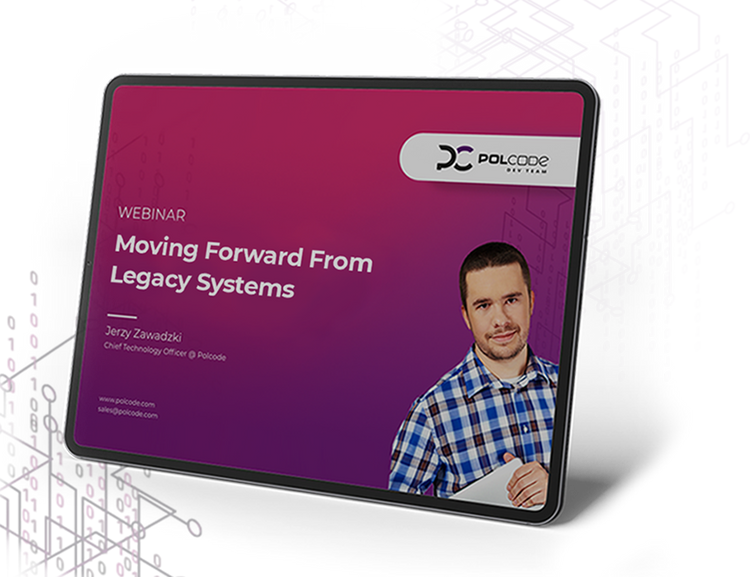
On-demand webinar: Moving Forward From Legacy Systems
We’ll walk you through how to think about an upgrade, refactor, or migration project to your codebase. By the end of this webinar, you’ll have a step-by-step plan to move away from the legacy system.
Latest Blog Posts
Headless Magento: When (and When Not) to Go Headless
Sep 23, 2026 by Dariusz Sadkowski
Magento vs Shopify for U.S. Mid-Market Brands: Which Platform Wins in 2026?
Sep 16, 2026 by Szymon Włodarski
Step-by-Step Guide: How to Choose the Right Magento Development Agency in the U.S.
Sep 11, 2026 by Michał Koziorowski
Plan Your Legacy Modernization with Confidence
Assess Your Current System
We analyze your architecture, technical debt, infrastructure, and operational risks to identify what is really slowing your business.
Define the Right Modernization Strategy
Based on the assessment, we recommend where refactoring, replatforming, rebuilding, or a combination of these approaches will create the most value.
Build a Practical Roadmap
Receive a prioritized modernization plan that minimizes risk, supports business continuity, and aligns technology investments with your long-term goals.