


Picture this: your engineering team needs to patch a critical security vulnerability in a system that’s been running your business for the past decade. The patch looks simple – a few lines of code. But nobody on the team remembers exactly what the module connects to, and the documentation hasn’t been updated since 2016. A developer makes the change, deploys it to production, and within minutes, three seemingly unrelated features stop working. Revenue reporting goes dark. Customer-facing APIs start throwing errors.
Sound familiar?
This scenario plays out across enterprises every week. Legacy systems, the monolithic, underdocumented, deeply interconnected platforms that power critical operations, are simultaneously indispensable and terrifying to change. They're black boxes that nobody wants to open, precisely because opening them tends to break things in unpredictable ways.
The solution isn't to freeze these systems in place forever. Business demands change, security vulnerabilities emerge, and scalability limits get hit. The real solution is automated testing: a systematic safety net that gives your engineering team the confidence to make changes without gambling with uptime, revenue, or compliance.
This article explains why automated testing is the foundation of any successful legacy modernization strategy, and how to implement it in phases without disrupting ongoing operations.
Automated Testing for Legacy Systems: Preventing Disaster Before It Hits
Picture this: your engineering team needs to patch a critical security vulnerability in a system that’s been running your business for the past decade. The patch looks simple – a few lines of code. But nobody on the team remembers exactly what the module connects to, and the documentation hasn’t been updated since 2016. A developer makes the change, deploys it to production, and within minutes, three seemingly unrelated features stop working. Revenue reporting goes dark. Customer-facing APIs start throwing errors.
Sound familiar?
This scenario plays out across enterprises every week. Legacy systems, the monolithic, underdocumented, deeply interconnected platforms that power critical operations, are simultaneously indispensable and terrifying to change. They're black boxes that nobody wants to open, precisely because opening them tends to break things in unpredictable ways.
The solution isn't to freeze these systems in place forever. Business demands change, security vulnerabilities emerge, and scalability limits get hit. The real solution is automated testing: a systematic safety net that gives your engineering team the confidence to make changes without gambling with uptime, revenue, or compliance.
This article explains why automated testing is the foundation of any successful legacy modernization strategy, and how to implement it in phases without disrupting ongoing operations.
Why Legacy Systems Without Testing Are a Liability
"Legacy" is often used as a polite way of saying "old code nobody fully understands anymore." But the real challenge isn't age — it's architecture. Legacy systems tend to share a set of dangerous characteristics that make them especially fragile:
monolithic design where a change in one module can propagate failures across the entire system;
undocumented dependencies where critical integration points exist only in the memory of developers who may no longer be at the company;
accumulated technical debt from years of workarounds and hotfixes layered on top of each other;
outdated technology stacks that limit your options for tooling, hiring, and modernization.
Without automated testing, every change to such a system is a gamble. There's no visibility into what's working, no mechanism to detect regressions before they reach production, and no safety net when something breaks at 2 AM on a Friday.
The business consequences are severe. The widely cited Gartner baseline puts downtime at $5,600 per minute, but that figure dates to 2014. More recent research paints a starker picture: according to ITIC, EMA & BigPanda, large enterprises now average $14,000 to $23,750 per minute in downtime costs ($840K - $1.4M per hour), while mid-sized businesses average around $9,000 per minute according to the Ponemon Institute.*
Deeper digital transformation and round-the-clock IT infrastructure dependency have driven these numbers up significantly over the past decade, and they show no sign of reversing. Compliance violations triggered by unintended data corruption can result in regulatory fines, especially in finance and healthcare. And customer trust erodes quickly when reliability issues become visible.
Manual testing offers no reliable escape from these risks. It's inconsistent, time-consuming, and doesn't scale with the frequency of modern releases. A manual tester checking 20 flows before deployment can't catch the edge case hiding in interaction number 847. Automated testing can.
"If you don’t know what’s working, you won’t know what broke." — Chapter 13, Legacy Software Modernization – a Guide for Enterprises
* We reference the Ponemon data because it remains the authoritative benchmark for the mid-market, illustrating that as digital transformation has deepened over the last decade, even these foundational cost estimates have only trended upward.
What Automated Testing Really Means in a Legacy Context
Automated testing in legacy environments means building structure and predictability into systems that currently have neither. The goal is to create a feedback loop: make a change, run the tests, and know immediately whether something broke.
Four core layers of testing work together to protect legacy systems during modernization:
Unit testing verifies the behavior of individual functions, classes, or components in isolation. In legacy systems, where business logic is often buried deep in spaghetti code, unit tests serve a critical documentation function as well: they codify what a component is supposed to do, even when the original code comments are absent or misleading.
Integration testing checks how components communicate with each other, whether module A correctly passes data to module B, whether API endpoints return the expected responses, and whether database queries behave correctly under different conditions. In systems where modules are tightly coupled, integration tests are often more valuable than unit tests, because that's where most real-world failures occur.
End-to-end testing simulates complete user workflows from start to finish. A test might replicate a user logging in, generating a report, and downloading a PDF, validating that the entire chain works correctly. Tools like Cypress or Playwright are particularly effective at catching the kind of multi-step failures that only appear in real usage conditions.
Regression testing is the most important safety net for legacy modernization. It verifies that changes made to one part of the system haven't broken something else. Every time you refactor a module, upgrade a dependency, or migrate a feature, your regression suite tells you what still works and what needs attention. Without regression tests, every deployment is a leap of faith.
These four layers become exponentially more powerful when integrated into a CI/CD pipeline. Rather than running tests manually before each release, CI/CD automatically runs your entire test suite every time code is pushed.
Issues are caught within minutes, not weeks, and the feedback loop between development and validation shrinks from days to hours.
Common Challenges and How to Overcome Them
Teams working with legacy systems face a predictable set of obstacles when trying to introduce automated testing. Here's how experienced engineering teams address each one.
Lack of documentation. If nobody wrote down what the system is supposed to do, how do you write tests for it? The answer is reverse engineering: use code audits, static analysis tools, AI, and automated dependency mapping to build a picture of how the system actually behaves. Production logs are invaluable here; they show you exactly which paths users take, which data flows are critical, and where failures have historically occurred. A formal software audit is often the best starting point, giving you a prioritized map of risk areas and integration dependencies.
Outdated technology. Legacy systems often run on technology stacks that have limited support for modern testing frameworks. The key is to introduce modern tools through compatibility layers rather than forcing an immediate full migration. PHPUnit can be added to older PHP projects via Composer without requiring an immediate framework upgrade. Cypress can test web interfaces regardless of what backend technology they run on. The goal is to start testing what you can today, while building a migration path for tomorrow.
Tight coupling and hidden dependencies. When every component in a system depends directly on every other component, writing tests requires you to set up enormous amounts of context just to test a single function. The approach here is incremental decoupling: identify the interfaces between major system components, introduce abstractions at those boundaries, and begin writing tests around the interfaces rather than the implementations. This naturally pushes the codebase toward better architecture while creating space for testing.
Limited time and resources. Engineering teams working on legacy systems are often already stretched thin. The answer isn't to add testing on top of everything else at once; it's to integrate testing into the development workflow incrementally. Start with the most critical, highest-risk functionality. Any new feature or bug fix becomes an opportunity to add test coverage for the surrounding code. Over 6–12 months of consistent application, even resource-constrained teams can build meaningful coverage.
A Phased Roadmap to Implement Testing in Legacy Systems
Successfully introducing automated testing to a legacy system requires a structured approach. Attempting to test everything at once creates paralysis; doing nothing creates compounding risk.
The following four-phase roadmap has proven effective across multiple enterprise modernization projects.
Phase 1 – Audit & Prioritization
Before writing a single test, invest time in understanding the system. Conduct a comprehensive code audit to map dependencies, identify integration points, and locate the highest-risk modules. Analyze production logs to understand which workflows are most business-critical and which have the highest failure rates. The output of this phase is a prioritized list of test targets, the areas where automated testing will provide the greatest return on investment.
Phase 2 – Core Coverage & Regression Suite
With priorities established, begin writing tests for the most critical paths. Focus first on the workflows that, if broken, would have immediate business impact: payment processing, authentication, core data queries, and key API endpoints. Establish a regression baseline, a suite of tests that captures the current behavior of the system, warts and all. This suite becomes your safety net for every subsequent change.
Phase 3 – Integration & Automation Pipeline
Once you have meaningful test coverage, integrate it into your CI/CD pipeline. Every code push should automatically trigger the full test suite. Configure alerts for test failures to catch issues before they reach production. At this stage, the team begins to experience the confidence that comes from automated validation, and developers can refactor and release knowing that the safety net is active.
Phase 4 – Maintenance & Continuous Improvement
Testing is an ongoing discipline. Monitor test results over time, identify flaky tests that produce unreliable results, and refactor tests as the system evolves. As coverage expands and the codebase matures, the cost of making changes continues to drop while release velocity increases. Teams that reach this phase typically report a fundamental shift in developer confidence and deployment frequency.
Case Study: Velocity Motoring
Velocity Motoring had built its core platform on Symfony 1.0.9, a framework that had reached end of life and was becoming increasingly difficult to maintain and secure. The system was entangled with critical business workflows: changing anything risked breaking everything.
A complete rewrite was not an option. The system was too complex, too critical to operations, and the risk of a big-bang migration was simply too high. Instead, we implemented a safety-first, step-by-step modernization strategy built on automated testing.
The approach began with introducing Composer for modern dependency management and PHPUnit for unit and integration testing. A gradual CI pipeline was established to run tests automatically on every commit. With this safety net in place, the team could begin modernizing the codebase gradually, upgrading one component at a time, validating each change before moving to the next.
The results over five years of careful, test-driven modernization:
the platform migrated from Symfony 1.0.9 all the way to Symfony 5.4 without a single disruptive outage;
regressions were caught automatically before reaching production;
and release cycles shortened as the team gained trust in the automated validation pipeline.
Read the full Velocity Motoring case study to see how each phase of the modernization unfolded.
How Automated Testing Enables Legacy System Modernization
Automated testing doesn't just prevent disasters in the short term; it creates the conditions for sustained, confident modernization over the years.
Teams that establish strong testing foundations consistently report the following outcomes:
Refactoring becomes predictable. When you can run a comprehensive test suite after every change, refactoring is no longer a gamble. Teams can improve code quality, eliminate technical debt, and modernize architecture with confidence.
New features and integrations roll out faster. With regression protection in place, the time spent manually verifying that existing functionality still works shrinks dramatically. Development velocity increases because less time is spent on manual validation and emergency fixes.
Scalability and performance improvements become safer. Optimizing a legacy system for scale requires changes that can introduce subtle bugs. Automated testing ensures that performance improvements don't come at the cost of functional correctness.
Long-term modernization initiatives become viable. Cloud migration, microservices decomposition, and database modernization all require the ability to validate system behavior at each step. Without automated testing, these initiatives are prohibitively risky. With it, they become manageable engineering projects.
Each investment in coverage reduces the cost of future changes, creating a virtuous cycle of increasing stability and velocity. For a broader look at modernization approaches, see our guide to legacy modernization strategies.
The ROI of Automated Testing for Legacy Systems
Engineering leaders often encounter resistance when proposing automated testing investments, particularly when the value isn't immediately visible. The business case, however, is strong.
Reduced downtime. Automated testing catches regressions before they reach production, reducing the frequency and severity of outages. Given that enterprise downtime can cost thousands of dollars per minute, even a modest reduction in outage frequency generates significant financial return.
Shorter release cycles. Manual testing is a bottleneck. QA cycles that once took days can be reduced to hours when comprehensive automated tests replace manual verification. Teams that implement automated testing typically report release cycle reductions of 30–50%.
Lower long-term maintenance costs. Bugs caught in testing are dramatically cheaper to fix than bugs caught in production. Organizations that adopt automated testing early typically see post-release bug costs fall by 30–40% over a two-year horizon.
Increased developer productivity and retention. Developers working on well-tested systems are more productive and less stressed. The confidence that comes from automated validation removes the anxiety associated with deployments and allows engineers to focus on building rather than firefighting, a significant consideration in a competitive hiring market.
Tools and Frameworks Worth Knowing
Choosing the right testing tools depends on the technology stack, the team's existing skills, and the specific types of tests being prioritized. Some frameworks that have proven effective in legacy modernization contexts:
PHPUnit for unit and integration testing in PHP applications;
Cypress for end-to-end testing of web interfaces regardless of backend technology;
Playwright as an alternative to Cypress with strong cross-browser support;
JUnit / TestNG for Java applications;
Jest for JavaScript applications from Node.js backends to React frontends;
GitHub Actions, Jenkins, or GitLab CI as CI/CD platforms that automate test execution on every push.
The right tool is ultimately the one your team will actually use. Start with what integrates most naturally into your existing workflow.
Polcode’s Testing and Modernization Services
Polcode specializes in legacy system modernization for enterprises, helping engineering teams introduce automated testing, establish CI/CD pipelines, and execute phased modernization programs without disrupting ongoing operations. Whether you need a dedicated engineering partner or want to extend your existing team with testing expertise, we have an engagement model to fit.
Free 10-Hour Solution Architect Workshop. Not sure where to start? Our workshop provides a comprehensive assessment of your current system, including system risk analysis and technical debt mapping, a test coverage audit to identify gaps and priorities, recommendations for automation stack and tooling, and a concrete plan for gradual CI/CD implementation, with no obligation to proceed.
Proof of Concept (PoC) — from $1,500 to $4,000. Want to see results before committing? Our PoC delivers a testing setup for your highest-priority module or workflow, a CI/CD pipeline draft with automated test execution, and a safety-first modernization roadmap with phased milestones. All without a long-term contract.
Full Modernization Services. For organizations ready to commit to a comprehensive modernization program, our Web Development Services cover automated testing implementation, code refactoring, security audits, performance optimization, API and integrations development, and cloud migration.
Conclusion: Modernization Without Testing Is Just Guesswork
Legacy systems aren't going anywhere overnight. They're too embedded in operations, too critical to business continuity, and too expensive to replace all at once. But modernizing them without a testing foundation is an exercise in controlled risk, and the risks are substantial.
Automated testing changes the equation. It gives engineering teams the visibility they need to understand what's working, the safety net they need to make changes with confidence, and the feedback loops they need to release more frequently and reliably. It transforms modernization from a high-stakes gamble into a structured, predictable engineering program.
The investment pays for itself quickly: fewer outages, faster releases, lower maintenance costs, and engineering teams that spend their time building the future rather than firefighting the past. If your legacy system currently lacks automated testing, the time to start is now, not after the next production incident.
Ready to take the first step? Contact Polcode to audit your test coverage, or download our full Legacy Software Modernization: A Guide for Enterprises for a deeper exploration of modernization strategies. If you'd prefer to see results before committing, our Proof of Concept program starts from $1,500 and delivers tangible outcomes within weeks.
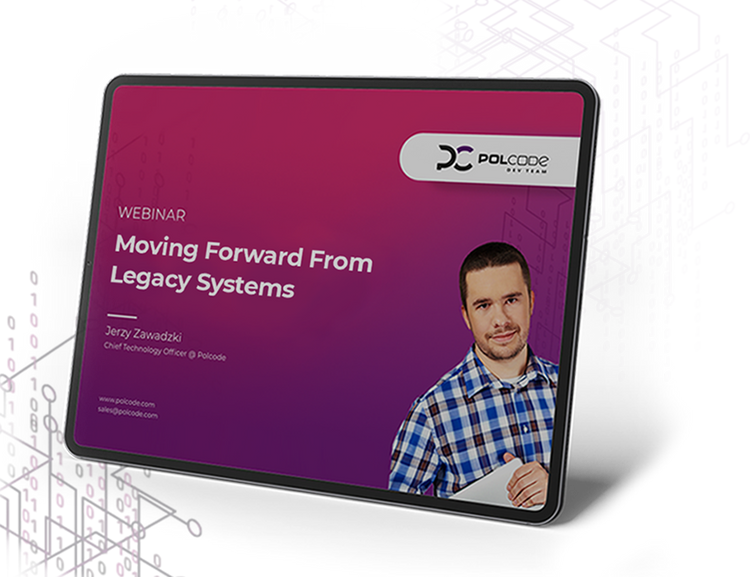
On-demand webinar: Moving Forward From Legacy Systems
We’ll walk you through how to think about an upgrade, refactor, or migration project to your codebase. By the end of this webinar, you’ll have a step-by-step plan to move away from the legacy system.
Latest Blog Posts
Headless Magento: When (and When Not) to Go Headless
Sep 23, 2026 by Dariusz Sadkowski
Magento vs Shopify for U.S. Mid-Market Brands: Which Platform Wins in 2026?
Sep 16, 2026 by Szymon Włodarski
Step-by-Step Guide: How to Choose the Right Magento Development Agency in the U.S.
Sep 11, 2026 by Michał Koziorowski
Take Control of Your Legacy System — Safely and Step by Step
Assess Your Risk
We analyze your system architecture, dependencies, and current test coverage to identify the most critical risk areas.
Build Your Safety Net
We implement automated tests and a CI/CD pipeline around your highest-priority workflows to protect what matters most.
Modernize with Confidence
With a reliable testing foundation in place, you can refactor, scale, and evolve your system without fear of breaking it.