

Why Developer Experience Is the New User Experience: Engineering Efficiency, Product Quality & Competitive Advantage

Developer Experience (DX) has become a strategic business capability. The quality of your developer environment, from tooling and documentation to deployment workflows and team practices, directly influences delivery speed, software quality, developer retention, and your ability to innovate at scale.
Why Developer Experience Is the New User Experience: Engineering Efficiency, Product Quality & Competitive Advantage
Developer Experience (DX) has become a strategic business capability. The quality of your developer environment, from tooling and documentation to deployment workflows and team practices, directly influences delivery speed, software quality, developer retention, and your ability to innovate at scale.
UX focuses on how end users interact with a product. DX focuses on how the product is built.
For years, User Experience (UX) has been one of the primary drivers of successful digital products. Companies have invested heavily in usability, design systems, and customer journeys, and rightly so. A product that frustrates users rarely succeeds, no matter how advanced its functionality.
But there is another dimension that has become equally critical, and it is one I encounter every single day in my work as an IT Talent Partner: Developer Experience (DX).
For years, I've helped software organizations build engineering teams, from fast-growing startups to enterprises running complex modernization programs. And I can tell you with confidence: the quality of a company's developer experience now determines its ability to attract and retain talent and to deliver software that actually reaches users on time.
DX is no longer an internal engineering concern. It has become a strategic lever that directly impacts delivery speed, product quality, cost predictability, and long-term competitiveness, and it is increasingly visible to candidates before they even accept an offer.
Interestingly, this shift begins long before a developer writes their first line of code. It often starts during the recruitment process, where engineering practices have become one of the key topics of conversation.
In this article, I want to explain why DX has become the new UX, what the data says about its business impact, and what engineering leaders can do to improve it.
What Is Developer Experience (DX)?
DX Definition & Core Concepts
Developer Experience refers to the overall experience developers have when building, testing, deploying, and maintaining software. It encompasses everything that influences how efficiently and reliably engineers can do their work, including codebase quality and maintainability, development tools and platforms, CI/CD pipelines and deployment workflows, documentation and onboarding processes, team collaboration and communication patterns, and clarity of requirements and technical ownership.
From an operational standpoint, DX determines how smoothly engineering work flows from idea to production, and how predictable that flow remains over time. A strong DX environment minimizes friction, shortens feedback loops, and allows developers to focus on delivering business value rather than overcoming process inefficiencies or technical obstacles.
From UX to DX: Why the Shift Matters
UX focuses on how end users interact with a product. DX focuses on how the product is built.
While these disciplines target different audiences, they are more closely connected than many organizations realize. As systems become more complex and delivery cycles continue to accelerate, poor DX silently undermines even the best UX strategies. Slow builds, fragmented tooling, unclear ownership, insufficient documentation, and technical debt eventually surface as delayed releases, production defects, outages, and missed market opportunities.
In simple terms: UX is what customers see. DX is what determines whether you can deliver it consistently.
Organizations that ignore DX often discover that even highly skilled teams struggle to maintain quality and velocity when the underlying development environment creates unnecessary complexity.
From a recruitment perspective, I would add one more observation: candidates increasingly evaluate both. They care about what the company builds, but also about the environment and practices that enable engineering teams to build it effectively.
DX vs UX: A Practical Comparison
User Experience (UX) Fundamentals
UX aims to reduce friction for users, increase engagement and conversion, build trust and satisfaction, and improve retention and brand perception. Organizations invest in UX research, design systems, usability testing, analytics, and customer feedback loops to achieve these goals. Success is typically measured through customer-centric metrics such as satisfaction scores, conversion rates, retention, and adoption.
Developer Experience (DX) Fundamentals
Developer Experience follows the same underlying principle, reducing friction, but for a different audience. DX aims to streamline engineering workflows, shorten feedback loops, improve delivery predictability, reduce operational risk, and enable sustainable scaling. Instead of optimizing customer journeys, DX optimizes engineering workflows. The objective is to create an environment where developers can build, test, deploy, and maintain software with minimal obstacles and maximum clarity.
How DX Influences Final End-User Outcomes
From an operational perspective, DX and UX are tightly coupled. Teams with strong DX ship features faster, introduce fewer defects, recover from incidents more quickly, and adapt more effectively to changing business priorities. Poor DX leads to rushed releases, fragile fixes, and accumulating technical debt. Eventually, these issues become visible to customers through slower innovation, lower reliability, and degraded user experiences.
This is why leading organizations increasingly view DX as a business capability rather than simply an engineering initiative.
The Business Value of Developer Experience
Faster Delivery & Time-to-Market
Organizations with mature DX practices consistently outperform competitors in delivery speed.
The numbers support this clearly. According to the DORA 2023 State of DevOps Report, elite-performing engineering teams deploy code 182 times more frequently than low-performing teams and recover from incidents 6,570 times faster. These gaps do not appear because elite teams have better developers; they appear because elite teams have better developer environments.
Clear workflows, automated pipelines, maintainable architectures, and reliable tooling allow teams to move from idea to production with fewer bottlenecks. For business leaders, this translates into shorter release cycles, faster response to market changes, more predictable roadmaps, and improved resource utilization. When teams spend less time fighting infrastructure, broken processes, or manual deployments, they can focus on innovation and customer value.
Higher Product Quality & Reliability
Strong DX reduces reliance on manual interventions and last-minute fixes. Automated testing, static analysis, CI/CD pipelines, and observability practices help teams identify issues earlier in the development lifecycle.
The DORA research is instructive here too: high-performing teams have a change failure rate of just 5% or less, compared to 46–63% for low-performing teams. That difference is not purely a function of skill; it reflects the quality of the development environment, testing infrastructure, and deployment processes surrounding the code.
This becomes especially important for organizations pursuing application modernization or legacy software modernization services. Many modernization initiatives fail not because the target architecture is wrong, but because the surrounding developer experience makes delivery slow, risky, and difficult to sustain. A maintainable codebase combined with effective development workflows creates the foundation for successful modernization efforts.
Talent Retention & Productivity
This is where I want to speak most directly from my own experience.
While compensation remains important, experienced engineers often evaluate a company's development environment just as carefully as its salary offer. Questions about deployment processes, documentation quality, onboarding, technical debt, testing practices, and ownership models have become common during hiring discussions.
One thing I've learned from hundreds of conversations with software engineers over the years is that experienced developers rarely leave companies because of technology alone. More often, they leave because friction accumulates—slow releases, unclear ownership, inconsistent processes, or simply too much time spent working around problems instead of solving them. That's exactly why Developer Experience has become such an important part of almost every recruitment conversation I have today
Developers want to know whether they can do their best work. Organizations that provide modern tooling, clear processes, and maintainable codebases are often better positioned to attract and retain senior engineering talent.
One topic that has become increasingly common in these conversations is AI. Candidates want to understand not only whether AI tools are available, but also how they are used in everyday engineering work. They look for organizations that encourage responsible AI adoption, share best practices, and treat AI as a way to eliminate repetitive work rather than replace engineering thinking. To me, that has become another sign of a mature Developer Experience.
When I speak with candidates who are evaluating new opportunities, they ask detailed questions about deployment processes, onboarding practices, testing standards, and documentation quality. These are not idle curiosities. Experienced developers know that these factors will determine how productive and satisfied they will be six months into a role.
Strong DX environments allow engineers to focus on meaningful problem-solving rather than firefighting. The result is improved productivity, greater engagement, and stronger retention, and in competitive U.S. technology markets, that is a significant competitive advantage. Organizations that invest in DX through software team augmentation services, therefore, gain advantages that extend well beyond delivery performance. They become more attractive employers, and they are better positioned to retain the technical talent they have already invested in developing.
Measuring and Improving DX
Key Metrics & Frameworks
Like any business capability, DX should be measured systematically. Without clear metrics, organizations struggle to identify friction points or determine whether improvement initiatives are delivering meaningful results. The DORA framework provides the most widely used set of engineering performance indicators: Lead Time for Changes, Deployment Frequency, Change Failure Rate, and Mean Time to Recovery (MTTR).
For DX specifically, organizations should also track onboarding time for new developers, which reveals the accessibility and quality of documentation, tooling, and knowledge-sharing practices. Teams where new engineers take months to become productive are often signaling deeper DX problems that affect everyone, not just new hires.
In my experience, time-to-productivity is one of the clearest indicators of an engineering organization's maturity. Companies that can clearly explain their documentation standards, new hire approach, and ownership model tend to make a strong first impression, even before a candidate joins the team.
Long lead times frequently indicate process bottlenecks or excessive review cycles. Low deployment frequency can signal delivery bottlenecks. High change failure rates often reveal quality and testing gaps. Slow new developer ramp-up often highlights broader issues related to documentation, knowledge sharing, or engineering processes.
Essential Tooling & Workflows
Modern DX relies on integrated toolchains that support consistency, automation, and visibility. Core capabilities typically include version control and structured code review practices, static analysis and linting, automated testing at unit and integration levels, CI/CD pipelines that support frequent and reliable deployments, monitoring and observability platforms, and developer portals or internal documentation systems that reduce reliance on institutional knowledge.
Mature engineering organizations understand that great DX is rarely the result of a single platform or tool selection decision. It emerges from workflows that reduce cognitive load and create consistency across teams. The objective is not standardization for its own sake, but creating systems that help developers work efficiently and predictably, regardless of which tools are ultimately chosen.
Team Culture & Continuous Improvement
DX is not only a tooling challenge. It is also a cultural and organizational one. Even the best development platforms can be undermined by unclear ownership, poor communication, inconsistent processes, or weak leadership alignment.
High-performing engineering organizations treat DX as an ongoing discipline rather than a one-time project. They continuously gather developer feedback, measure delivery performance, refine workflows, improve documentation, and reduce unnecessary complexity. The most successful teams view DX as a shared responsibility across engineering leadership, platform teams, DevOps specialists, architects, and individual contributors. This mindset creates sustainable improvements rather than temporary fixes.
Real-World Examples & Case Studies
Internal Developer Platform Wins
Many organizations improve DX dramatically by investing in Internal Developer Platforms (IDPs), unified systems that standardize environments, automate repetitive tasks, simplify deployments, and reduce cognitive load across engineering teams.
Spotify's Backstage, now an open-source CNCF project, is one of the most cited examples. Before centralizing their developer tooling, Spotify engineers were spending significant portions of their time navigating fragmented infrastructure. After introducing Backstage as a unified developer portal, the company reported measurable reductions in onboarding time and improved consistency across hundreds of engineering teams.
Netflix has similarly invested heavily in internal platforms and developer tooling, and regularly cites DX as a foundational element of its ability to ship at scale. Their investment in observability, automated deployment pipelines, and chaos engineering practices has allowed them to maintain high deployment frequency while managing an extraordinarily complex distributed system.
The business case in both cases is straightforward: internal developer platforms increase engineering throughput without requiring proportional increases in headcount. In highly competitive markets, that efficiency translates directly into competitive advantage.
DX Impact on Modern Development Flows
DX becomes even more important in distributed delivery environments, team extension models, and large-scale modernization initiatives. When teams operate across locations, time zones, or organizational boundaries, which is the reality for most of the organizations I work with today, consistency becomes critical. Clear standards, reliable onboarding processes, maintainable documentation, and automated delivery pipelines help extended teams integrate quickly and contribute effectively.
From a talent perspective, a strong new hire journey and well-defined engineering practices are also important retention drivers. Developers who can quickly become productive and understand how teams operate tend to report higher satisfaction and stronger engagement over time. This is particularly relevant for organizations leveraging software team augmentation services, where external engineers must integrate seamlessly into existing development processes.
Similarly, companies pursuing application modernization or legacy software transformation often discover that technical improvements alone are insufficient. Without addressing DX-related issues such as documentation gaps, delivery bottlenecks, unclear ownership, or fragile deployment processes, modernization efforts frequently struggle to achieve their intended outcomes. Strong DX provides the operational foundation necessary for sustainable transformation.
Conclusion + Next Steps
Developer Experience has evolved from an internal engineering concern into a strategic business capability.
Like UX, it directly influences outcomes. The difference is that DX operates behind the scenes, shaping how effectively engineering teams can deliver, adapt, and scale.
Having spent years working at the intersection of technical hiring and engineering performance, I have seen the evidence accumulate across hundreds of organizations: teams with strong DX ship faster, build better products, and hold onto their best engineers longer. Teams that neglect it tend to burn through talent, accumulate technical debt, and find themselves consistently unable to meet delivery expectations, no matter how capable the individual developers they hire.
The business case is clear. Organizations that invest in Developer Experience consistently benefit from faster delivery, higher product quality, improved reliability, stronger developer productivity, better talent retention, and greater operational scalability.
As software systems grow increasingly complex and the competition for engineering talent remains intense, DX will continue to play a defining role in competitive performance. For organizations investing in custom web software development, application modernization, or software team augmentation, improving DX is not simply about making developers happier. It is about creating an environment where engineering teams can consistently deliver value, respond to change, and support long-term business growth.
The first step is often the simplest: identify where friction exists today. Whether those obstacles appear in tooling, onboarding, deployment processes, documentation, or organizational workflows, addressing them can unlock significant gains in productivity, quality, and delivery performance. The organizations that treat Developer Experience as a strategic priority will be the ones best positioned to innovate, scale, and compete in the years ahead.
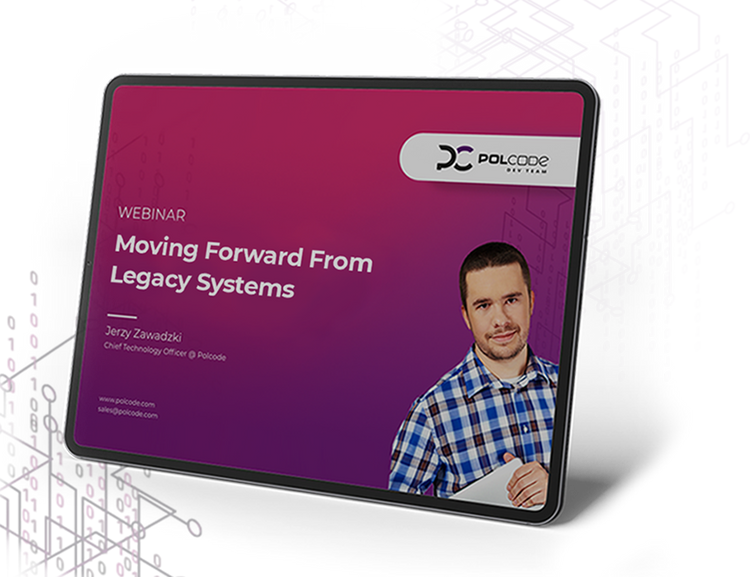
On-demand webinar: Moving Forward From Legacy Systems
We’ll walk you through how to think about an upgrade, refactor, or migration project to your codebase. By the end of this webinar, you’ll have a step-by-step plan to move away from the legacy system.
Latest Blog Posts
Let's Talk About Your Engineering Challenges
Share Your Goals
Tell us about your product, engineering team, or modernization plans.
Explore the Right Approach
We'll discuss how to improve delivery processes, reduce engineering friction, and support your business objectives.
Build with Confidence
Whether you need custom software development, application modernization, or engineering expertise, we're here to help.