


TL;DR
The debate about AI's impact on software development is over. The real question now is which agency business models will survive it. As AI dramatically increases productivity, hourly billing is becoming harder to justify and easier for clients to challenge. Discover why the most successful agencies are moving beyond selling time, how outcome-based delivery changes the economics for both clients and vendors, and what the rise of AI-native agencies means for the future of technology services.
Agencies of the Future Will Sell Systems, Not Hours
TL;DR
The debate about AI's impact on software development is over. The real question now is which agency business models will survive it. As AI dramatically increases productivity, hourly billing is becoming harder to justify and easier for clients to challenge. Discover why the most successful agencies are moving beyond selling time, how outcome-based delivery changes the economics for both clients and vendors, and what the rise of AI-native agencies means for the future of technology services.
The End of the Hourly Rate?
There's a conversation happening in boardrooms and Slack channels across the technology industry, and it's making a lot of agency founders uncomfortable. The debate about whether AI will change how software is built is over; it already has. The only question now is whether your agency’s business model is built to survive what comes next.
The hourly rate, the foundation of how most technology agencies price, staff, and grow, is structurally incompatible with an AI-augmented world. And the enterprises that buy technology services are starting to figure that out.
The Hourly Rate Was Never Really About Value
Let's be honest about what the hourly billing model actually measures: presence, not outcomes. It answers the question "how long did someone work?" rather than "what did the client get?"
For decades, this was an acceptable approximation. Software development was labor-intensive, making hours a reasonable proxy for progress. You needed a certain number of developers, working a certain number of hours, to ship a certain amount of functionality. The math was imperfect but defensible.
AI has broken that approximation entirely.
A senior developer working with modern AI-assisted tooling can produce in two hours what previously took two days. A well-designed automated testing pipeline catches in minutes what a manual QA cycle took a week to find. An experienced architect with the right toolset can scaffold in an afternoon what used to require a two-week discovery sprint.
If your agency bills by the hour, you are now in a position where getting better at your craft, becoming faster, more efficient, and more capable, directly reduces your revenue. That is a broken incentive structure. And as we explored in detail in The Hidden Cost of Time & Material in the AI Era, clients with any sophistication are beginning to notice it.
What Clients Actually Want to Buy
Enterprise clients, the CTOs, CIOs, and digital transformation leads, who sign the contracts have never really wanted to buy hours. They wanted to buy certainty.
Certainty that a system will be delivered. Certainty that it will work as specified. Certainty that the budget won't spiral because a sprint ran long or a dependency turned out to be more complex than estimated. Certainty that when something goes wrong (and in software, something always goes wrong), the agency is accountable for fixing it, not billing for the extra time it takes to do so.
The hourly model transfers all of that risk to the client. Every estimate is a guess. Every change in scope is a negotiation. Every overrun is the client's problem. The agency, billing by the hour, is financially insulated from the consequences of its own decisions.
This is the fundamental misalignment that forward-thinking agencies are starting to address, not because it's the ethical thing to do (though it is), but because it's becoming the competitive differentiator that wins and retains the clients worth having.
The Shift: From Selling Time to Selling Systems
The agencies that will define the next decade are structured around repeatable systems:
proprietary methodologies,
AI-augmented workflows,
automated quality assurance,
and delivery frameworks that produce consistent outcomes regardless of which specific people are staffed on a project.
This is the insight that Tomasz Karwatka captured in his analysis of the AI-Native Agency model: the most valuable thing a technology services firm can build isn't a roster of talented developers. It's the proprietary system that makes those developers, and increasingly, AI tools, dramatically more productive than the market average.
When you sell a system rather than hours, the economics change fundamentally. Your margin doesn't compress when your team gets more efficient; it expands. Your value proposition doesn't erode as AI tooling becomes commoditized — it deepens because your system determines how well those tools are applied. And your relationship with clients shifts from vendor to strategic partner, because you're accountable for outcomes rather than inputs. This shift also changes how engineering teams are structured and integrated, moving from outsourced delivery toward more embedded, co-sourced models.
What This Means for How Agencies Are Structured
Agencies built around hourly billing are optimized for utilization: keeping developers billable, minimizing bench time, and staffing projects to the hour. Agencies built around outcome delivery are optimized for something entirely different — for building and refining the internal systems that enable consistent delivery.
That means investing in internal tooling and AI workflows that most agencies currently treat as overhead. It means building proprietary quality assurance and testing infrastructure rather than treating it as a line item that gets cut when budgets are tight. It means developing delivery frameworks specific enough to your domain that they constitute genuine intellectual property.
It also means being willing to price in a way that reflects delivered value rather than consumed time. Not all commercial models are equally suited to this, and the differences matter more than most agencies realize. Our comparison of Time & Material, Fixed Price, and Max Price & Flexible Scope breaks down exactly how each model distributes risk, shapes incentives, and determines who benefits when a team gets more efficient.
The agencies that develop the confidence to work within outcome-based structures and build the internal systems to justify it are the ones that will attract and retain the clients who are increasingly unwilling to absorb the risk of open-ended hourly engagements.
The Client Perspective: Why This Matters on the Buying Side
If you're a CTO or IT director evaluating technology partners, the agency model you choose has direct implications for your project outcomes (not just your budget!)
An agency billing by the hour has no structural incentive to deliver faster, to automate what can be automated, or to build systems that reduce the ongoing need for their involvement. Their revenue scales with your dependency on them. That's not a criticism of the people; it's a consequence of the incentive structure.
An agency working toward a fixed outcome, with a capped budget and flexible scope, is aligned with you. Their incentive is to solve your problem as efficiently as possible, using whatever combination of human expertise and AI tooling gets there fastest.
But financial structure alone doesn't guarantee results. Outcome-based delivery requires active governance on the agency side, someone explicitly accountable for budget alignment, prioritization discipline, and risk visibility throughout the project. We've written about what that responsibility looks like in practice in our piece on what a Product Delivery Manager actually owns in Max Price & Flexible Scope delivery.
The Transition Is Already Happening — With or Without You
Y Combinator's most recent Request for Startups identified AI-Native Agencies as one of the highest-potential categories for new company formation. The thesis is straightforward: the firms that figure out how to use AI not to reduce headcount but to increase the value of each engagement will command dramatically higher margins than traditional service businesses.
The enterprises buying technology services are paying attention. Procurement teams are asking harder questions about AI utilization. Boards are scrutinizing IT budgets with more sophistication than they were two years ago. The tolerance for open-ended, hourly-billed engagements is declining because buyers are getting better at recognizing when they're absorbing risk that should sit with the vendor.
The agencies that wait for this shift to force their hand will find themselves in an increasingly difficult position: competing on price against firms with lower labor costs, while watching the clients they most want to work with migrate toward partners who can offer something more than hours.
What the Next Model Looks Like
At Polcode, this conversation has shaped how we think about structuring engagements. The model we've developed — Max Price, Flex Scope — is a direct response to the misalignment that hourly billing creates.
The logic is simple: the client knows their maximum budget from day one. There are no surprises, no overruns, no renegotiations when a sprint runs long. Within that budget, scope is flexible if priorities shift, if a better technical approach emerges, or if AI tooling makes one part of the project faster than anticipated, we can reallocate accordingly. What the client gets is the best possible outcome within a defined financial ceiling, delivered by a team that has every incentive to be efficient because efficiency benefits them as much as it benefits the client.
This only works if you've built the internal systems to back it up: the delivery frameworks, the automated quality assurance, the AI-augmented workflows, the governance structures that keep prioritization disciplined when scope pressure emerges. The model is the visible part. The system underneath it is what makes the model sustainable.
We're not the only firm moving in this direction, and we won't be the last. The agencies that figure out how to make this work will define what technology services look like in the next decade. The ones that don't will be competing on hourly rates against an increasingly crowded field, in a market where AI is systematically compressing the value of undifferentiated labor.
The choice, for agencies and for the clients who hire them, is worth making deliberately.
If you're evaluating technology partners and want to understand how outcome-based delivery works in practice, or if you're curious about how Polcode structures engagements under the Max Price Flex Scope model, we're happy to walk through it. Start with a conversation, no hourly rate required.
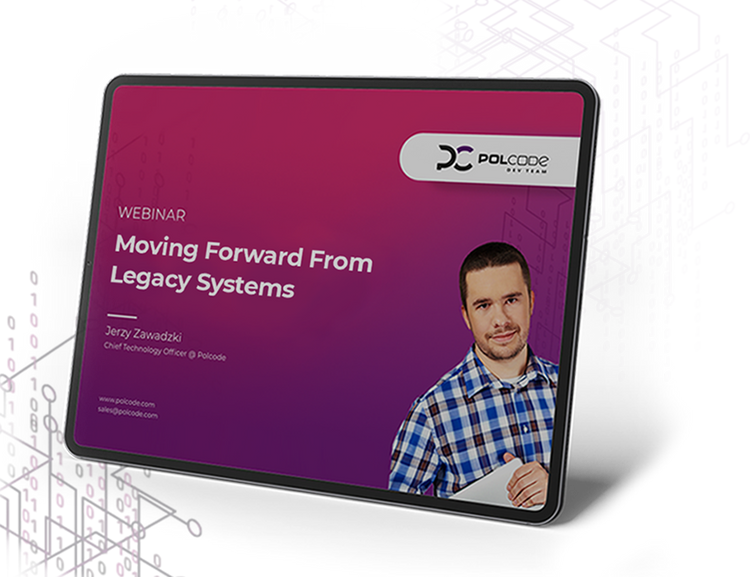
On-demand webinar: Moving Forward From Legacy Systems
We’ll walk you through how to think about an upgrade, refactor, or migration project to your codebase. By the end of this webinar, you’ll have a step-by-step plan to move away from the legacy system.
Latest Blog Posts
Headless Magento: When (and When Not) to Go Headless
Sep 23, 2026 by Dariusz Sadkowski
Magento vs Shopify for U.S. Mid-Market Brands: Which Platform Wins in 2026?
Sep 16, 2026 by Szymon Włodarski
Step-by-Step Guide: How to Choose the Right Magento Development Agency in the U.S.
Sep 11, 2026 by Michał Koziorowski
Looking for a Technology Partner That Delivers More Than Hours?
Book a Discovery Call
Tell us about your product, platform, or digital transformation initiative.
Explore the Best Path Forward
We'll help you define priorities, reduce delivery risks, and identify opportunities to accelerate with AI.
Build with Confidence
Partner with a team focused on delivering measurable business outcomes, not maximizing billable hours.