


AI prototyping tools like Lovable make it easier than ever to validate product ideas, but turning a prototype into a reliable, scalable application requires a different set of skills. Using MatchLink as an example, this article explores where AI accelerates product development, and where experienced engineering, UX, and architecture become essential.
The MatchLink App: What Happens After Lovable Gets You Started
AI prototyping tools like Lovable make it easier than ever to validate product ideas, but turning a prototype into a reliable, scalable application requires a different set of skills. Using MatchLink as an example, this article explores where AI accelerates product development, and where experienced engineering, UX, and architecture become essential.
TL;DR
Lovable helped MatchLink go from idea to working prototype fast, proving that amateur football teams genuinely needed a better way to organise friendly matches. But validating an idea is only half the battle.
As usage grew, the project needed real product architecture, scalable UX, payments, stability, and long-term thinking. MatchLink became a perfect example of where AI prototyping speeds things up — and where professional product development takes over.
A Cancelled Match. A Real Problem
A cancelled football match doesn’t sound like the beginning of a software product. But for one football coach in the UK, it was exactly that.
Like many amateur coaches, our client kept running into the same frustrating problem: league matches were cancelled all the time. Finding a replacement opponent at short notice depended almost entirely on personal networks. Information about available teams circulated through WhatsApp groups, Facebook posts, and mutual contacts. If you didn’t know the right people, organising a game quickly became difficult.
The idea was straightforward: a platform where football teams could find opponents for friendly matches — the way people find each other on dating apps. Post your availability, browse what's out there, send an offer, and confirm a game. No more scrambling through WhatsApp threads.
Lovable Got Them on the Pitch Fast
Instead of hiring a development agency immediately, the client built the first version himself using Lovable. For this stage of the project, it made perfect sense.
Within a short time, he had something real: a working prototype he could put in front of actual coaches and test.
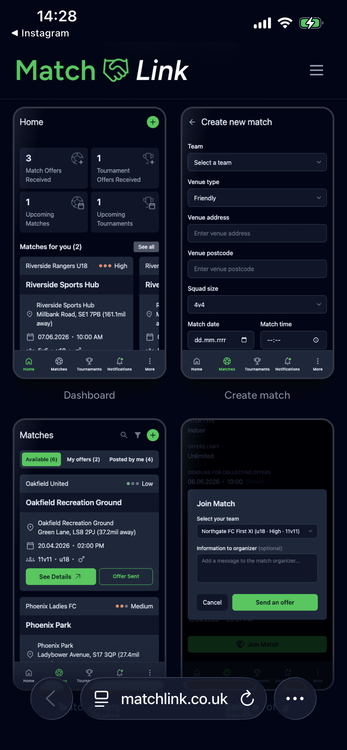
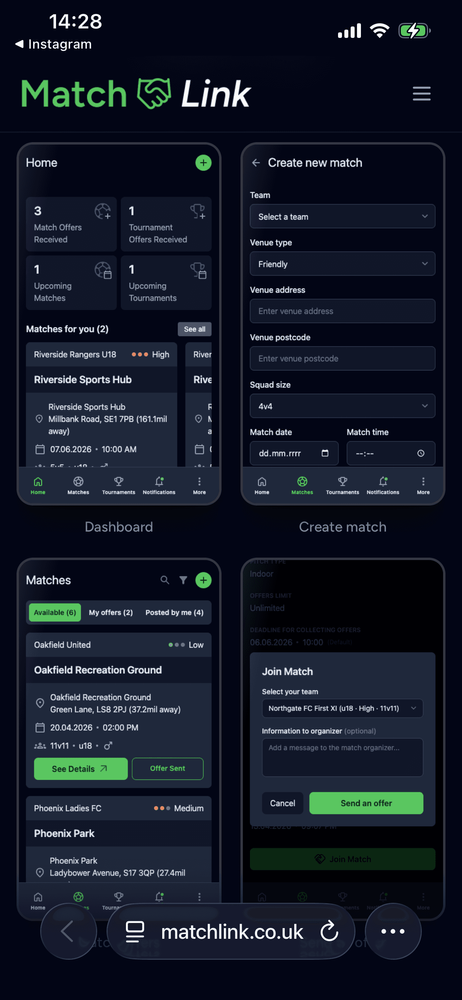
The final MatchLink dashboard focused on surfacing the most relevant actions immediately.
The core mechanic worked. The idea held up. He had a proof of concept without spending a significant budget or waiting months for development to begin.
This is exactly what tools like Lovable are built for. For non-technical founders, they make it possible to test ideas quickly and without committing to full-scale development upfront. Rather than investing heavily in assumptions, founders can validate whether people actually want the product first.
In this case, they did want it. But then something shifted.
Half-Time: When the Prototype Hits Its Ceiling
As more users joined the tests, the cracks appeared. Bugs that were hard to trace. Instability when real people used it in real conditions. Updates that caused unexpected knock-on effects. The prototype had done its job perfectly, but it was starting to buckle under the weight of becoming an actual product.
Lovable got them further than they expected. So why isn't it enough?
The answer isn't that Lovable is flawed. It's that a prototype and a product are fundamentally different things. A prototype proves an idea. A product has to work reliably, scale as users grow, handle payments, protect data, and keep working as the product evolves. The tools optimised for speed at the prototype stage aren't the same ones you need to build something that lasts.
Our client understood this. Rather than trying to patch the prototype indefinitely, he brought us in.
➡ Not sure what comes next after validating your idea? MVP: What’s Next?
Start with the Problem, Not the Feature List
The prototype gave us something most projects don't start with: validated thinking. We knew the core mechanic worked. We knew what coaches actually needed. We didn't have to do the discovery; the prototype had already done it for us.
What we did have to do was rebuild — properly, and with a clear scope.
We started with a simple question: what actually needs to work for this to solve the problem? A coach between training sessions doesn't need a complex platform. They need to post a match, find a suitable opponent, and confirm the game. Everything else is secondary.
Coaches could browse nearby teams, evaluate compatibility, and send offers directly inside the app.
From there, every product decision focused on removing friction.
A Progressive Web App, not separate native builds. Rather than creating separate iOS and Android applications, which would have doubled the cost and complexity, we built a PWA. It works on any device, can be installed from both the App Store and Google Play, and behaves like a native app without the overhead of maintaining two codebases. For an early-stage product, this is the right trade-off.
Stripe for subscriptions, built in from day one. Monetisation isn't something you should bolt on later. We integrated Stripe from the start to keep the subscription flow simple and avoid painful retrofitting later.
In-app chat and map. Once two teams are matched, they need to sort out the details quickly. Keeping that conversation inside the app, with location and mapping built in, meant nothing got lost across three different WhatsApp threads. If teams leave the app to communicate, the product immediately loses part of its value.
Matching filters that actually work. Availability alone isn’t enough. Coaches need opponents at the right level, within a reasonable distance, at a time that works. The goal wasn't to show every available team. It was to show the right ones.
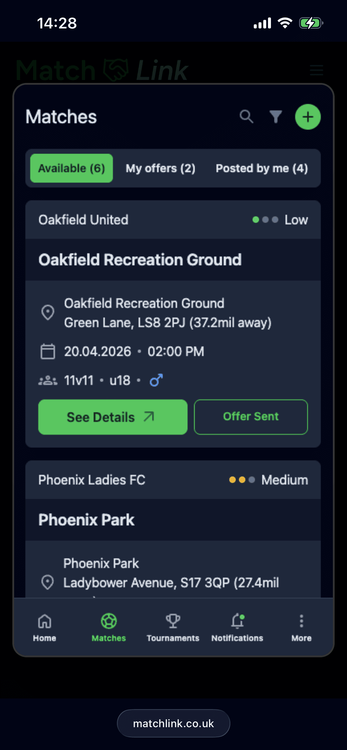
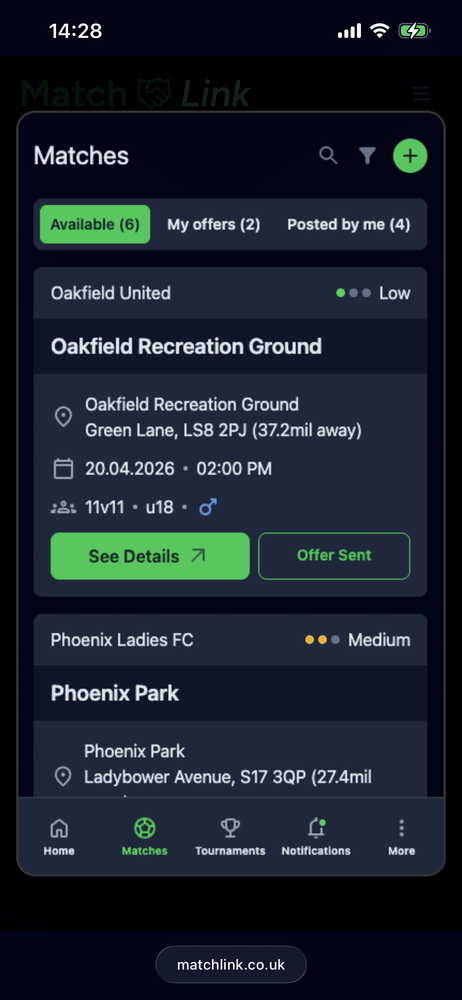
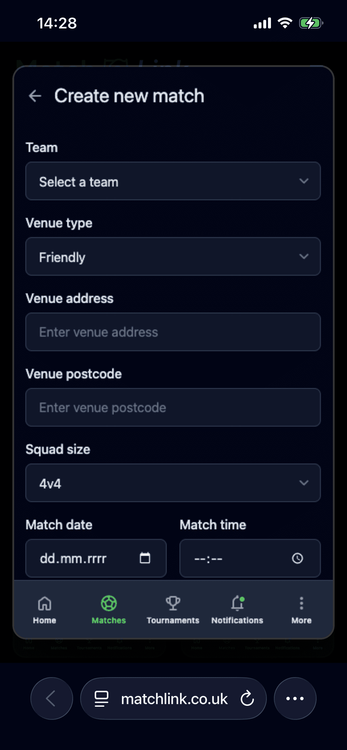
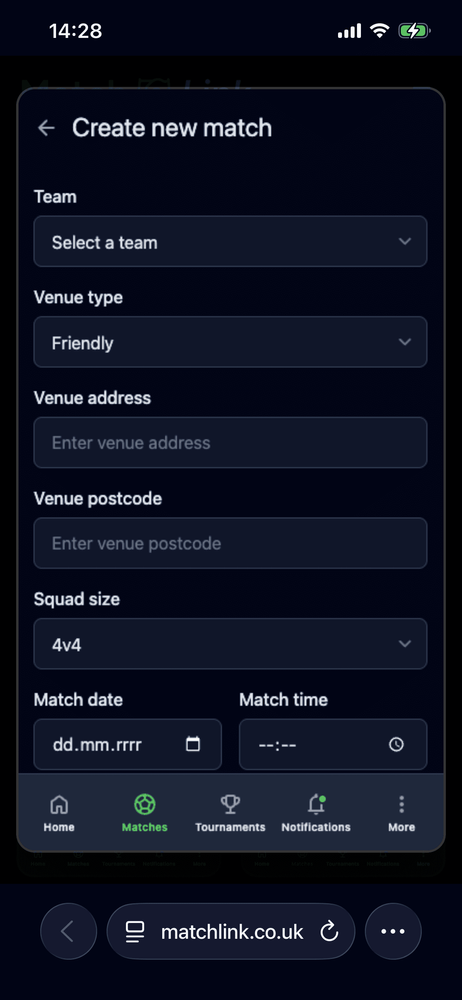
Creating a new match was intentionally kept lightweight and mobile-first.
➡ Thinking about testing your own idea this way? How to Bring Your MVP Project to Life Successfully?
A Product Isn't Just Functional — It Has to Feel Finished
Technical stability is necessary. It isn’t sufficient.
One of the biggest differences between a prototype and a real product is how intentional the experience feels. Even when the core functionality works, rough UX creates hesitation. Users stop trusting the product because the interaction itself feels unfinished.
Design was a major part of the transition. We kept the client’s existing branding, but built a complete UX and UI system around it - consistent navigation, clear information hierarchy, deliberate interaction flow. The objective wasn’t visual complexity. It was reducing cognitive effort.
A coach opening the app between drills shouldn’t need to think about how the interface works. The flow should feel obvious almost immediately. That’s often the hidden difference between something people test once and something they keep coming back to.
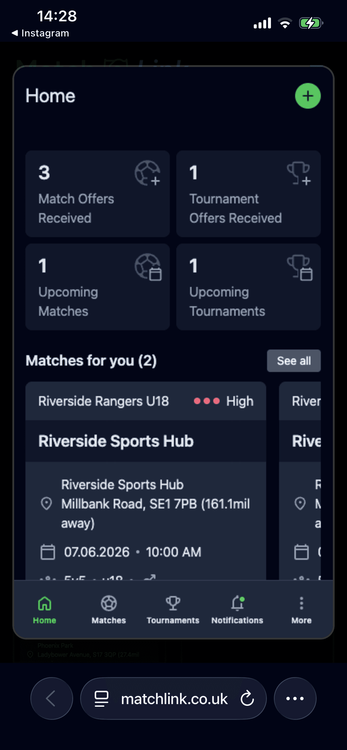
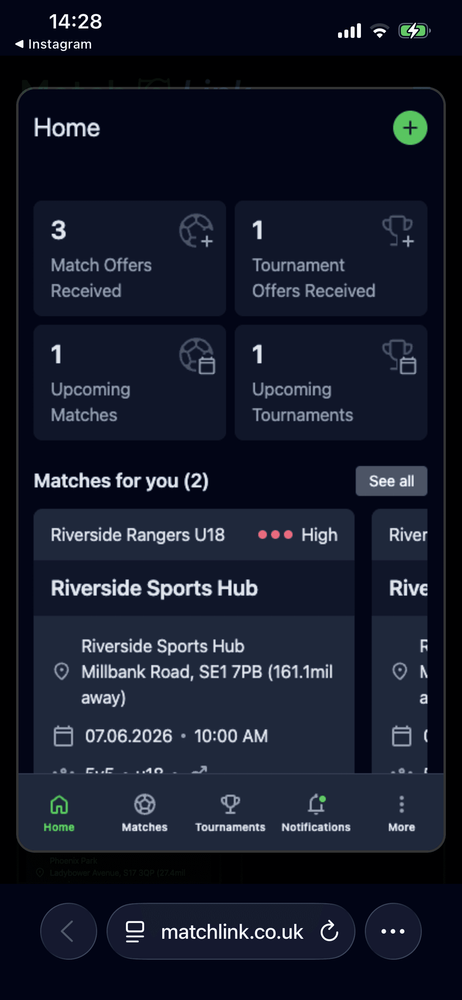
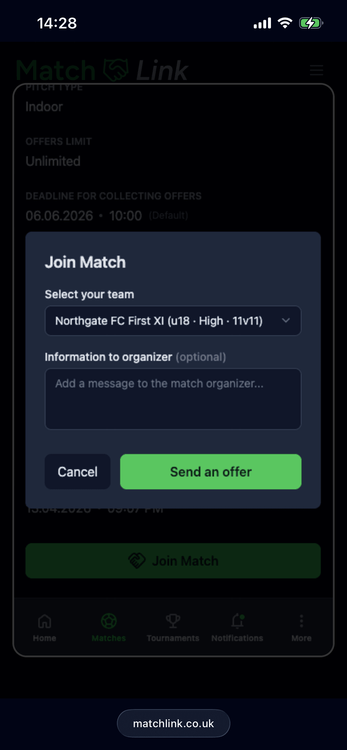
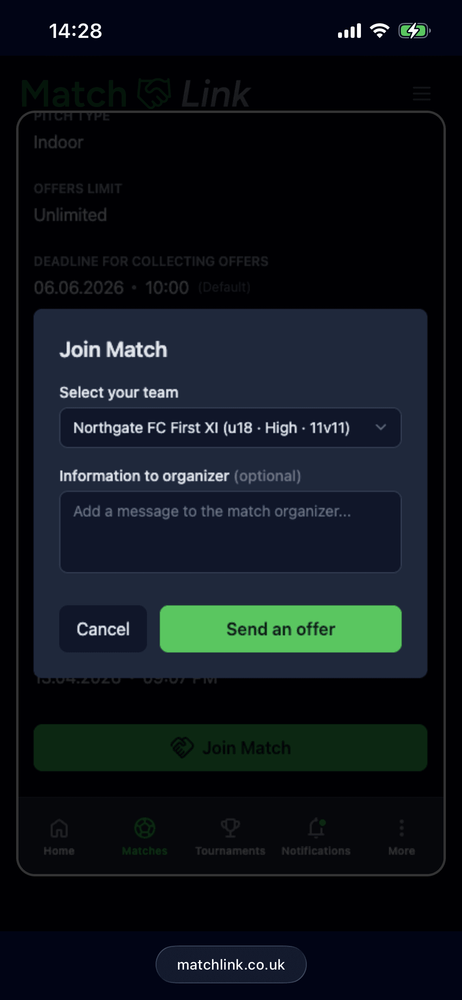
Joining a match happened entirely in-app, reducing coordination friction between teams.
The Landing Page Wasn’t an Afterthought
A working product still needs a clear way to introduce itself. As part of the project, we built a dedicated landing page aligned with the app’s design system. Not because every startup needs a complex marketing ecosystem, but because users need continuity from discovering a product to deciding to trust it.
It explained the value proposition, guided users smoothly from discovery into sign-up, and felt like part of the same product — not a disconnected brochure site. At the early stage, especially if the website feels like it belongs to a different team than the app, users notice immediately.
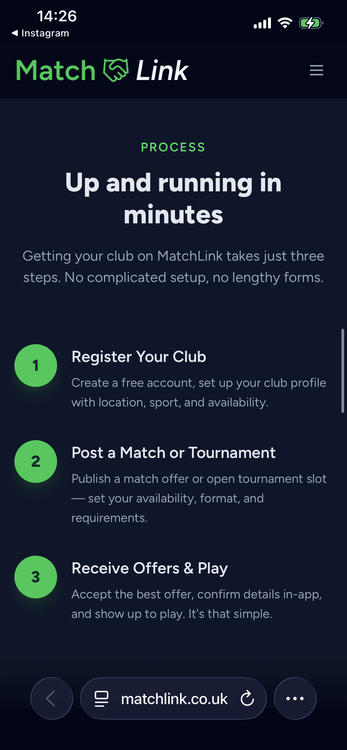
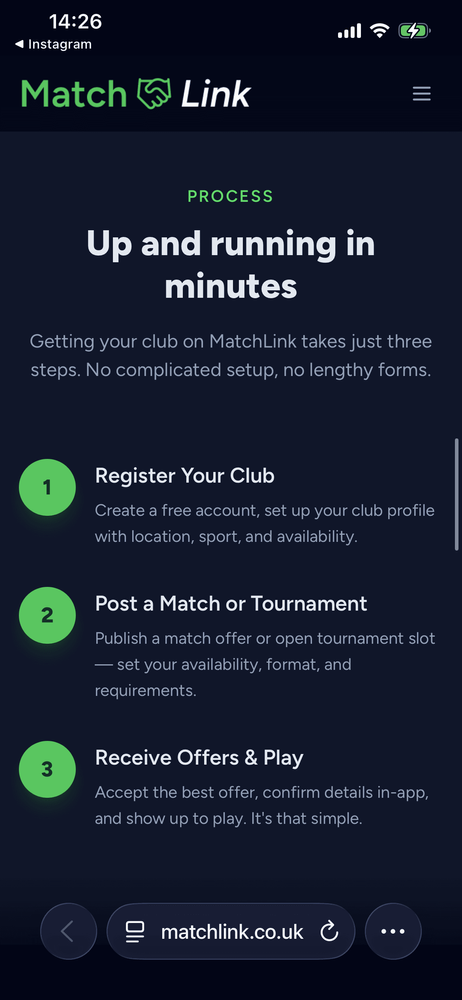
The landing page and app shared a unified design system and product language.
What This Project Actually Demonstrates
The most interesting part of MatchLink isn’t just the app itself. It’s what the project says about modern product development.
Tools like Lovable have changed the early stage of building products completely. Founders can validate ideas faster and cheaper than ever, often without writing code or hiring a development team upfront. That’s a real shift, and honestly, a positive one. More founders should probably test ideas this way before investing heavily in custom development.
The onboarding flow focused on getting clubs operational within minutes, not hours.
➡ Never gone through an MVP process before? First Time MVP Meeting? Here’s What You Need to Know
But projects like MatchLink also show where AI prototyping tools reach their natural boundary.
Building the first version is easier than ever. Building the version people can rely on is still the hard part.
Because eventually, products stop being experiments. They become systems people depend on, and at that stage, scalability, UX consistency, payments, maintainability, and long-term product decisions matter far more than how quickly the prototype was assembled.
The original MatchLink prototype proved the idea could work. The product phase was about making sure it could survive real-world use.
Those are two very different kinds of work.
➡ Related: How We Controlled AI Hallucinations in a Luxury Travel MVP
On-demand webinar: Moving Frorward From Legacy Systems
We’ll walk you through how to think about an upgrade, refactor, or migration project to your codebase. By the end of this webinar, you’ll have a step-by-step plan to move away from the legacy system.
Latest Blog Posts
Headless Magento: When (and When Not) to Go Headless
Sep 23, 2026 by Dariusz Sadkowski
Magento vs Shopify for U.S. Mid-Market Brands: Which Platform Wins in 2026?
Sep 16, 2026 by Szymon Włodarski
Step-by-Step Guide: How to Choose the Right Magento Development Agency in the U.S.
Sep 11, 2026 by Michał Koziorowski
Ready to Talk about Your Project?
Tell Us More
Fill out a quick form describing your needs. You can always add details later on and we’ll reply within a day!
Strategic Planning
We go through recommended tools, technologies and frameworks that best fit the challenges you face.
Workshop Kickoff
Once we arrange the formalities, you can meet your Polcode team members and we’ll begin developing your next project.