

When Modern Frontends Matter: How React, Vue, and Angular Help Replace Slow, Hard-to-Maintain Interfaces

React won’t fix a slow API. Vue won’t rescue a broken user journey. And Angular won’t make technical debt disappear by magic. Frontend modernization pays off when the frontend is actually holding your product back. The real skill is knowing when that’s the case and when your problem lives somewhere else entirely.
When Modern Frontends Matter: How React, Vue, and Angular Help Replace Slow, Hard-to-Maintain Interfaces
React won’t fix a slow API. Vue won’t rescue a broken user journey. And Angular won’t make technical debt disappear by magic. Frontend modernization pays off when the frontend is actually holding your product back. The real skill is knowing when that’s the case and when your problem lives somewhere else entirely.
Introduction
Few parts of a software product influence both user experience and software delivery as directly as the frontend. As products evolve, interfaces become more complex, technical debt accumulates, and introducing even small changes starts requiring disproportionate engineering effort. For many organizations, this is the moment when frontend modernization moves from a technical discussion to a business priority.
Modern frameworks such as React, Vue, and Angular provide the architecture and tooling needed to build maintainable, scalable interfaces. However, deciding to rebuild the frontend should be the result of a technical assessment rather than the starting point. Similar symptoms can originate from very different problems. Slow interactions may be caused by backend bottlenecks, declining conversion rates may reflect poor user journeys, and delivery delays often result from architectural complexity rather than the frontend framework itself.
Successful modernization therefore begins by identifying what actually limits the product. Once that becomes clear, choosing the right framework becomes a technical decision that supports broader business objectives instead of an expensive assumption.
In this article, we'll explore when modern frontend frameworks create measurable business value, how to recognize whether the frontend is truly the source of delivery problems, and how React, Vue, and Angular fit into a broader modernization strategy.
🔗How to Overcome Legacy Code Challenges in Enterprise E-Commerce Development
In This Article
This guide explores the questions technology leaders most often ask when planning frontend modernization:
How do you know if your frontend actually needs to be rebuilt?
Is a slow interface caused by the frontend, the backend, or poor UX?
What do React, Vue, and Angular actually solve?
When does a frontend rebuild introduce unnecessary risk?
How should organizations choose the right framework?
Can modernization happen incrementally instead of through a full rewrite?
TL;DR
Modern frontend frameworks improve maintainability and developer productivity, but they are not a universal solution to performance problems.
Slow interfaces may result from backend architecture, inefficient APIs, poor UX, or legacy frontend code. Identifying the real bottleneck should always come first.
React, Vue, and Angular solve different engineering challenges. The right choice depends on business context, product complexity, and long-term maintenance goals.
Frontend modernization delivers the greatest value when combined with UX improvements and a broader modernization strategy.
Successful projects focus on solving business and engineering problems—not simply replacing one technology stack with another.
The Real Cost of a Slow, Outdated Frontend
A slow or outdated frontend affects far more than the user experience. Long before customers begin noticing inconsistent interfaces or slower interactions, engineering teams usually experience the consequences first. Features take longer to implement, components become difficult to reuse, and even small UI changes require navigating years of accumulated technical debt.
Over time, these technical constraints begin affecting the business. Delivery becomes less predictable, onboarding new developers takes longer, and maintaining the existing application consumes an increasing share of engineering capacity. Instead of building new functionality, teams spend more time working around limitations introduced by the current frontend architecture.
These symptoms often trigger discussions about React, Vue, or Angular. Sometimes that leads to the right decision. However, similar delivery problems can also originate elsewhere in the system, which is why understanding the source of the friction should always come before selecting a new framework.
Is It Really a Frontend Problem?
Before investing in a frontend rebuild, it is worth determining where the product's limitations actually originate. Similar symptoms can point to completely different technical problems, and replacing the user interface will not improve issues that stem from another layer of the application.
When the Backend Is the Bottleneck
If slow API responses, inefficient database queries, or legacy integrations delay every request, a new frontend will simply display the same information with a different technology stack. Performance improvements require backend optimization before frontend modernization can deliver measurable value.
When the Real Issue Is User Experience
Applications sometimes perform well from a technical perspective while still frustrating users. Complex navigation, unnecessary steps, or inconsistent workflows reduce usability regardless of the framework behind the interface. In these cases, UX improvements have a greater impact than rewriting the frontend.
When Architecture Limits Change
Some products become difficult to evolve because business logic, APIs, and frontend components have gradually become tightly coupled. Modern frameworks provide a cleaner structure for future development, but they should be introduced as part of a broader architectural improvement rather than treated as an isolated solution.
When the Frontend Really Is the Problem
Legacy AngularJS applications, extensive jQuery codebases, or heavily customized server-rendered interfaces eventually become expensive to maintain. Replacing them with React, Vue, or Angular gives engineering teams a more maintainable foundation for future development, provided the rebuild addresses the underlying architectural issues rather than only replacing one technology with another.
What Modern Frontend Frameworks Actually Solve
Modern frontend frameworks are designed to make applications easier to evolve rather than simply making them look more modern.
They encourage reusable components, clearer application structure, predictable state management, and mature development tooling that simplify long-term maintenance. As products grow, these capabilities reduce the effort required to introduce new features, maintain consistency across the interface, and onboard new engineers.
Frameworks such as React, Vue, and Angular also support modern delivery approaches including design systems, Progressive Web Apps, and headless architectures. Their value therefore extends beyond the interface itself by providing a technical foundation that allows products to continue evolving without repeatedly rebuilding the frontend.
Where Modern Frameworks Introduce New Risk
Frontend modernization also introduces new architectural decisions. Organizations that rely on organic search should evaluate rendering strategies such as SSR or SSG early in the project, while simpler marketing websites may not benefit from a JavaScript framework at all.
The bigger risk, however, is treating a framework migration as a substitute for product improvement. Modern technology cannot compensate for inefficient business processes, confusing user journeys, or tightly coupled backend systems. A successful modernization initiative improves architecture, maintainability, and user experience together.
React vs. Vue vs. Angular: How Polcode Chooses
Choosing a framework is rarely the starting point of a modernization project.
Before recommending React, Vue, or Angular, we evaluate the product, its architecture, the team's way of working, and the organization's long-term goals. The right framework depends on the problem being solved, not on market popularity.
React
React is well suited to products that evolve continuously, such as SaaS platforms, ecommerce solutions, customer portals, and other highly interactive applications. Its flexibility makes it an excellent choice for organizations planning headless architectures or long-term product development, provided strong engineering standards are in place.
Vue
Vue works particularly well when modernization needs to happen gradually. Its approachable learning curve and progressive adoption model make it a practical choice for teams introducing modern frontend practices without rebuilding an entire application at once.
Angular
Angular is often the strongest fit for large enterprise systems where consistency, governance, and long-term maintainability outweigh the need for maximum flexibility. Its opinionated architecture helps distributed engineering teams work within a shared set of conventions.
What Responsible Frontend Modernization Looks Like
Successful modernization begins with assessing the existing application rather than planning the rewrite. The objective is to identify where technical debt has accumulated, determine whether modernization can happen incrementally, and align frontend improvements with broader architectural priorities.
In many cases, replacing individual modules over time reduces implementation risk while allowing product development to continue. Regardless of the delivery model, the most successful projects improve the product itself rather than simply replacing its frontend technology.
🔗 How to Overcome Legacy Code Challenges in Enterprise E-Commerce Development
Frontend Modernization in Practice
Every modernization project is different, but the objective remains the same: creating interfaces that are easier to maintain, extend, and evolve as business needs change.
At Polcode, we've applied modern frontend technologies across ecommerce platforms, SaaS products, marketplaces, and customer-facing applications—always selecting the technology that best fits the product rather than following industry trends.
For example, MatchLink uses a modern frontend to support a highly interactive platform where teams can quickly discover opponents, manage tournaments, and coordinate communication. Meanwhile, The Occasionist Studio combines an elegant React-based interface with AI-powered travel planning, delivering a premium digital experience while giving developers a maintainable foundation for future growth.
Although these products serve entirely different markets, they share the same engineering principle: a frontend should make future development easier, not harder.
Frequently Asked Questions
How do I know if my frontend needs to be rebuilt?
A rebuild is worth considering when the interface itself slows product development. Common signs include outdated frameworks such as AngularJS (1.x), duplicated UI logic, increasing maintenance effort, or technologies that have become difficult to hire for. A technical assessment should always confirm that the frontend—not another part of the system- is the primary constraint.
Is React, Vue, or Angular the best choice for my project?
There is no universal answer. The right framework depends on your product, architecture, engineering team, and long-term business goals rather than popularity.
Can we modernize without a full rewrite?
Yes. Many organizations successfully modernize legacy frontends incrementally, replacing individual modules while continuing normal product development.
Does a modern frontend improve SEO?
Not automatically. SEO depends on rendering strategy, content structure, and technical implementation. Modern frameworks can support excellent SEO when paired with approaches such as server-side rendering or static site generation.
Can a modern frontend work with a legacy backend?
In many cases, yes. Modern interfaces are frequently introduced while existing backend systems continue operating, allowing organizations to modernize incrementally instead of replacing the entire application.
How does Polcode choose the right frontend framework?
We begin by understanding the product rather than the technology. After evaluating architecture, business goals, and long-term maintenance requirements, we recommend the framework that best supports future product development.
Let's Talk About Your Frontend
Whether you're considering a complete rebuild or a phased modernization, the first step is understanding what is actually limiting your product.
At Polcode, we help organizations evaluate frontend architecture, identify technical and business bottlenecks, and choose modernization strategies that improve maintainability, accelerate product development, and support long-term growth.
If your current frontend is slowing releases, increasing engineering effort, or making future development more difficult, we'd be happy to discuss the most effective modernization approach for your team.
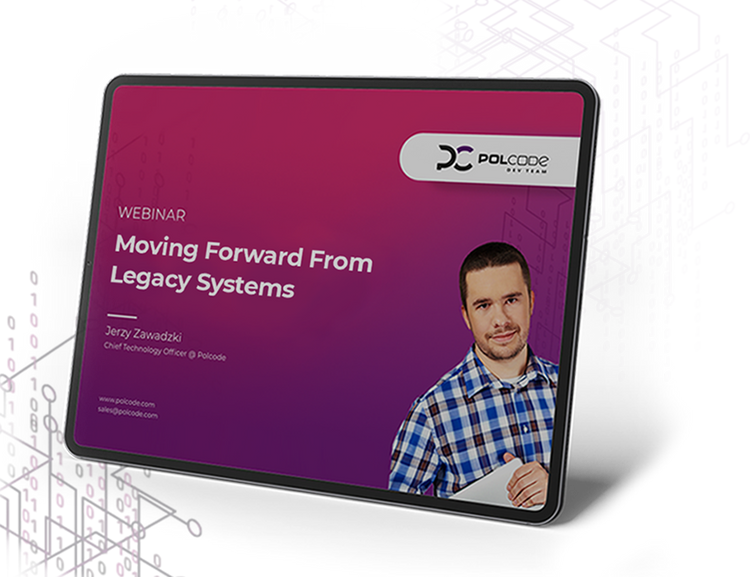
On-demand webinar: Moving Forward From Legacy Systems
We’ll walk you through how to think about an upgrade, refactor, or migration project to your codebase. By the end of this webinar, you’ll have a step-by-step plan to move away from the legacy system.
Latest Blog Posts
Headless Magento: When (and When Not) to Go Headless
Sep 23, 2026 by Dariusz Sadkowski
Magento vs Shopify for U.S. Mid-Market Brands: Which Platform Wins in 2026?
Sep 16, 2026 by Szymon Włodarski
Step-by-Step Guide: How to Choose the Right Magento Development Agency in the U.S.
Sep 11, 2026 by Michał Koziorowski
Before You Rebuild, Find Out What’s Really Slowing You Down
Assess your current frontend
Identify whether the real bottleneck is frontend architecture, UX, backend performance, integrations, or a combination of factors.
Choose the right modernization path
Decide whether you need targeted improvements, incremental modernization, or a full frontend rebuild.
Build for what comes next
Select the architecture and technology, React, Vue, Angular, or another approach, that supports your product and long-term development goals.