


Delivery models define the financial structure. Governance determines how that structure operates in practice.
In projects executed under a Max Price & Flexible Scope model, financial predictability is established through a predefined budget ceiling, while scope remains adaptable within that boundary. The structural differences between this model, Fixed Price, and Time & Material are discussed in detail in our comparative analysis of delivery models.
The role responsible for maintaining balance within this structure is the Product Delivery Manager (PDM).
This article outlines what that responsibility entails in practice.
What a Product Delivery Manager Actually Owns in Max Price & Flexible Scope Delivery
Delivery models define the financial structure. Governance determines how that structure operates in practice.
In projects executed under a Max Price & Flexible Scope model, financial predictability is established through a predefined budget ceiling, while scope remains adaptable within that boundary. The structural differences between this model, Fixed Price, and Time & Material are discussed in detail in our comparative analysis of delivery models.
The role responsible for maintaining balance within this structure is the Product Delivery Manager (PDM).
This article outlines what that responsibility entails in practice.
Beyond Coordination
In many traditional Time & Material environments, project management concentrates on coordination: tracking tasks, reporting hours, aligning timelines, and facilitating communication between stakeholders.
The structural implications of this model are examined more broadly in “The Hidden Cost of Time & Material in the AI Era”
In Max Price & Flexible Scope delivery, the PDM’s responsibility extends beyond coordination into financial and strategic governance. The PDM manages alignment between budget, priorities, and business value.
Team Dynamics and Relationship Management
While governance structures define how decisions are made, delivery still happens through people.
In Max Price & Flexible Scope environments, the Product Delivery Manager plays an active role in maintaining healthy team dynamics and effective collaboration. This includes supporting developers in making informed decisions, ensuring that the team operates with clarity of direction and shared understanding of priorities.
The PDM also acts as a bridge between the team and the client, ensuring that expectations are clearly communicated and that feedback flows in both directions. Strong relationships on both sides create conditions where better solutions can be developed.
This dimension of the role is less formalized than budget or scope management, but equally critical to sustained delivery quality.
Budget Ownership Within Defined Boundaries
A predefined maximum budget introduces a structural constraint. That constraint requires active ownership throughout the lifecycle of the project.
This commercial shift away from open-ended billing was outlined in our earlier article on why we moved away from Time & Material in Managed Delivery.
Within this framework, the Product Delivery Manager is responsible for:
monitoring budget consumption in relation to delivered value,
identifying early signals of misalignment,
proposing trade-offs when scope pressure emerges,
ensuring that financial exposure remains within agreed limits.
Without explicit ownership of this dimension, a capped-budget structure becomes theoretical rather than operational.
Prioritization as an Ongoing Discipline
Flexible scope does not imply undefined scope. It requires structured reprioritization within financial boundaries.
In innovation-driven and AI-supported environments, where new technical possibilities frequently emerge, disciplined prioritization becomes even more critical. Our broader approach to embedding AI into delivery workflows is described in “RE:WORKING How Software Is Built: Inside Polcode’s AI Transformation”
Acceleration without prioritization can lead to rapid complexity growth. The PDM ensures that speed translates into measurable value rather than volume.
Risk Management in Adaptive Environments
Max Price & Flexible Scope projects operate within defined financial limits while allowing scope evolution. This combination requires structured risk awareness.
The structural logic behind choosing between Time & Material, Fixed Price, and Max Price & Flexible Scope is further detailed in our delivery model comparison.
Within this structure, the PDM is accountable for:
identifying emerging delivery risks,
assessing their potential financial impact,
adjusting sequencing or scope accordingly,
maintaining transparency with stakeholders.
Risk management becomes a continuous activity embedded in delivery governance.
Accountability in AI-Supported Delivery
As AI becomes embedded in delivery workflows, certain tasks accelerate while others require deeper validation and oversight. Code may be generated more quickly, but architectural integrity and long-term maintainability demand disciplined review.
Our structured AI governance framework is described in “AI in Software Delivery: How Polcode Builds Predictable, Responsible, AI-Supported Systems”
Within Max Price & Flexible Scope delivery, the PDM ensures that acceleration does not compromise quality, that sufficient time is allocated for review, and that architectural coherence is maintained within the agreed financial boundary.
Product Perspective and Growth Direction
Through continuous involvement in delivery and close collaboration with the client, the Product Delivery Manager develops a deep understanding of the product - its constraints and its opportunities.
This creates space to go beyond execution and help shape the product’s direction. The PDM can identify potential next steps, highlight areas of untapped value, and support informed decision-making about future development paths.
Rather than positioning this as an extension of scope, it becomes a natural outcome of shared context and ongoing teamwork.
Why This Role Matters
Max Price & Flexible Scope creates a framework where financial predictability and adaptability coexist. However, as discussed in our structural analysis of Time & Material: "The Hidden Cost of Time & Material in the AI Era" the commercial structure alone does not guarantee value realization.
Without explicit ownership of:
budget alignment,
prioritization discipline,
risk mitigation,
and decision transparency,
the structural advantages of the model weaken.
The Product Delivery Manager connects commercial structure with engineering execution and business objectives, ensuring that defined boundaries translate into measurable outcomes - not just controlled delivery.
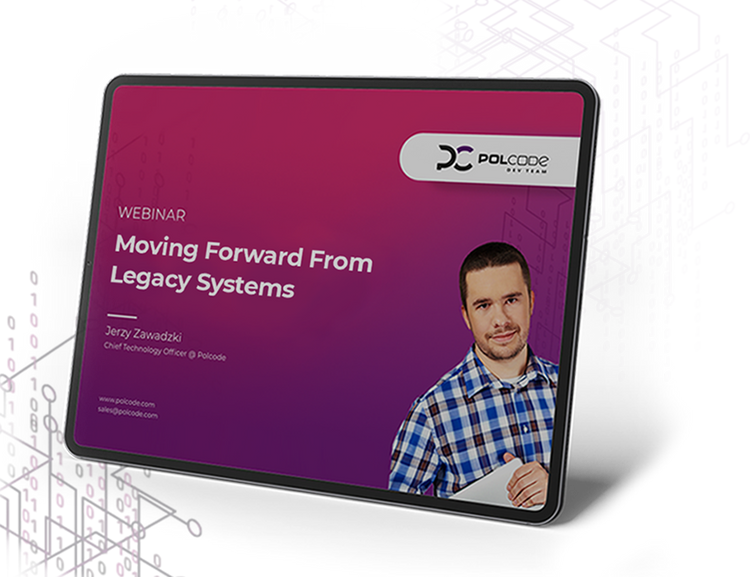
On-demand webinar: Moving Forward From Legacy Systems
We’ll walk you through how to think about an upgrade, refactor, or migration project to your codebase. By the end of this webinar, you’ll have a step-by-step plan to move away from the legacy system.
Latest Blog Posts
Model Comparison: Fixed Price vs Max Price & Flexible Scope vs Time & Material
Mar 18, 2026 by Karina Przybyłek
The Hidden Cost of Time & Material in the AI Era
Mar 11, 2026 by Sylwia Masłowska
Heroku in “Sustaining Engineering” Mode – What It Technically Means and When to Consider Migration
Feb 27, 2026 by Jerzy Zawadzki
Rethink Your Software Delivery Model
Assess Your Current Delivery Structure
Understand how your current commercial model distributes risk, incentives, and accountability across the project lifecycle.
Evaluate the Impact of AI on Delivery Efficiency
Identify where AI is accelerating development and how those efficiency gains affect cost structures and project governance.
Explore Outcome-Aligned Delivery Models
Consider commercial frameworks that balance flexibility with financial predictability and align delivery incentives with business value.